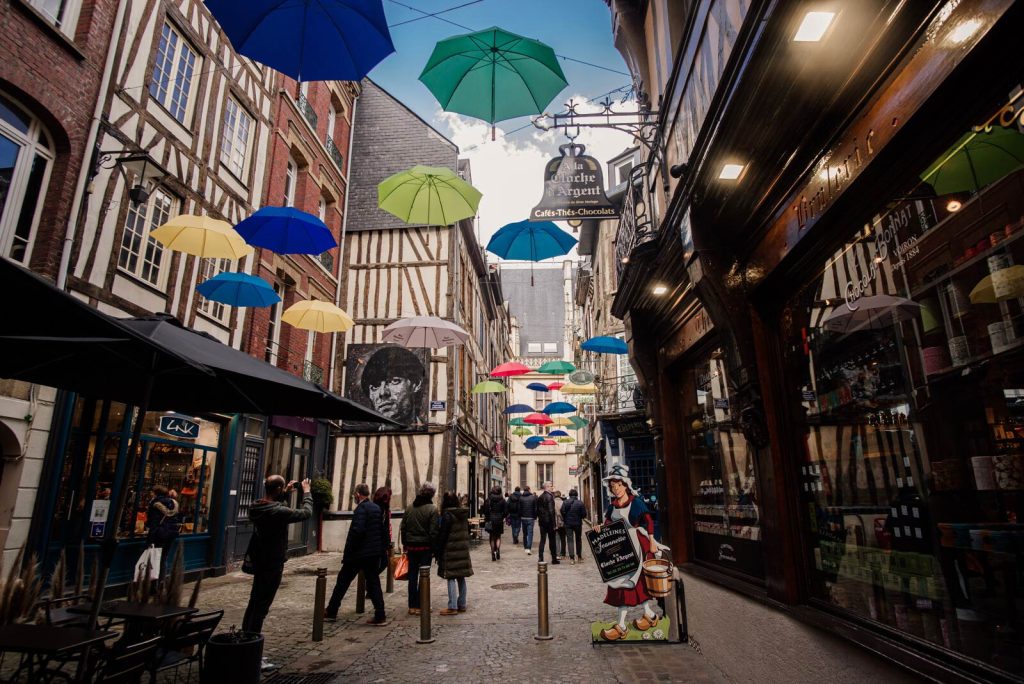
Wondering where to go in Normandy? The region is divided into five counties known as départements. Find out more about them here.
La Manche
In France, the English Channel is known as La Manche (which means ‘the sleeve’) and this département takes its name from the sea that surrounds it on three sides. It stretches from the UNESCO-listed Bay of the Mont-Saint-Michel in the west, to Utah Beach in the east. Offshore islands like the Chausey Islands, Tatihou Island, and towns like Saint-Vaast-la-Hougue or Saint-Marcouf form part of its exceptionally diverse and rich coastline. Manche is famed for specialities like salt-marsh lamb, Barfleur mussels and Saint-Vaast-La-Hougue oysters, and festivities like the UNESCO-listed Granville Carnival and the Mont-Saint-Michel Marathon.
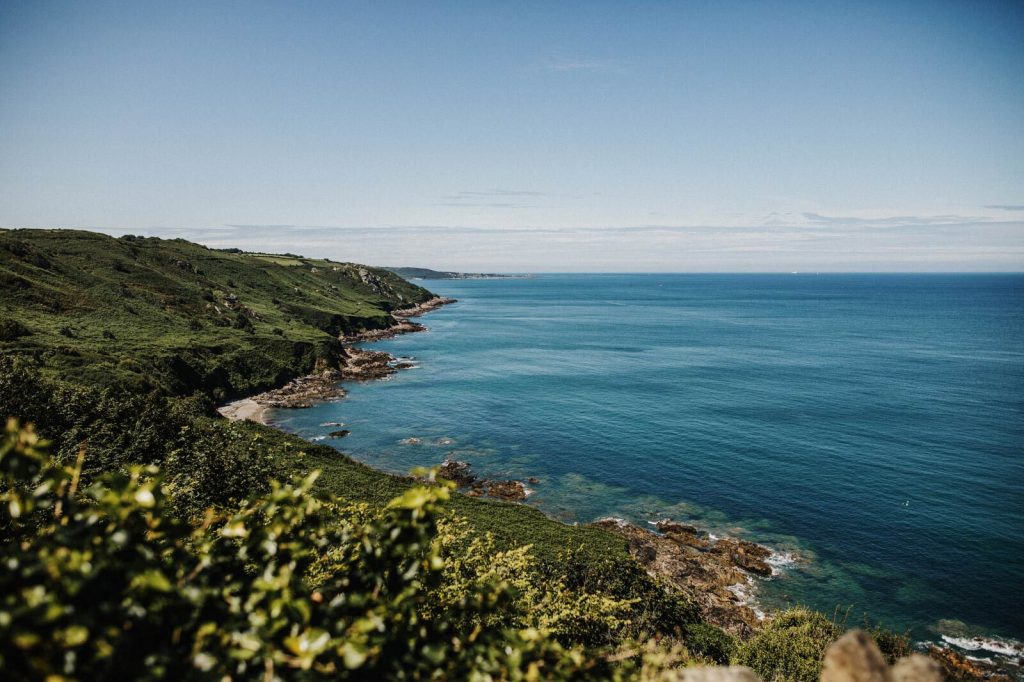
What makes the difference: long sandy beaches and unspoilt landscapes.
3 places not to be missed during a weekend in La Manche:
- The world-famous Mont-Saint-Michel and its Bay, best visited in low season
- The huge Cité de la Mer in Cherbourg
- Utah Beach, one of the five D-Day Landing Beaches
Calvados
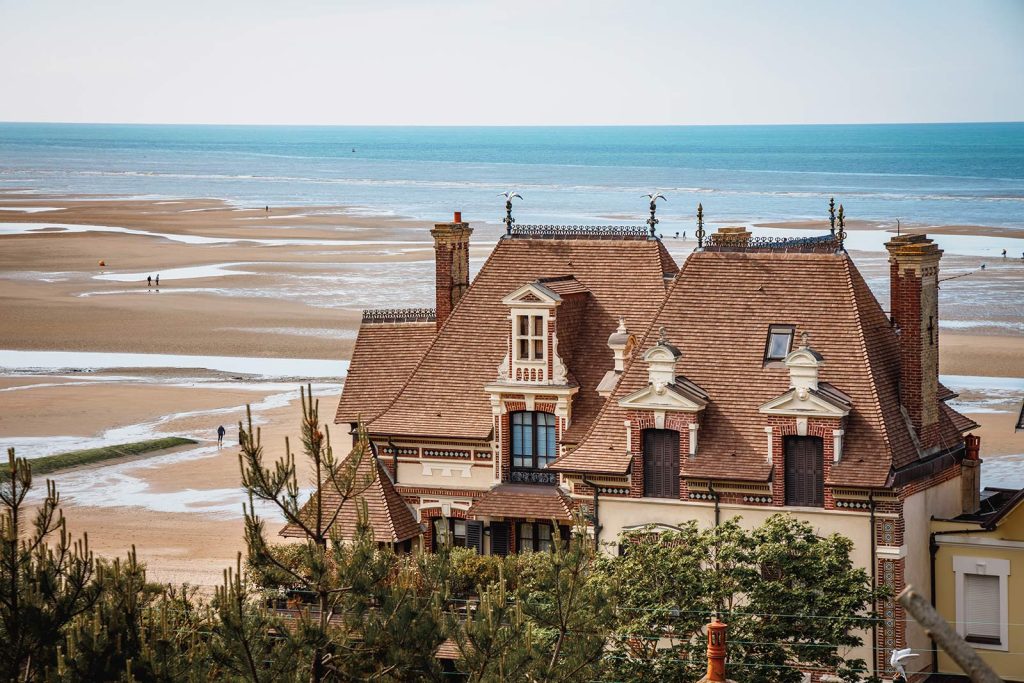
This département is home to so much history! In 1027, William the Conqueror was born here in the town of Falaise. In 1944, Calvados was the battleground for much of the D-Day Landings and the Battle of Normandy. The D-Day Landing Beaches and the Flowered Coast to the east of it attract millions of visitors every year; not only history buffs, but also those who want to enjoy sandy beaches, seaside resorts and the chic seaside resorts of Deauville, Trouville-sur-Mer and Cabourg, not to mention the popular town of Honfleur. Caen, the capital of Calvados, is a buzzing student city, while just 15 minutes away, the popular Beauregard Festival takes place every July. Food specialties to enjoy here include cider, cream (which is served with everything) and teurgoule, a regional rice-pudding dessert.
What makes the difference: Its family-friendly seaside resorts, and its ever-present history.
3 places not to be missed during a weekend in Calvados:
- The D-Day Landing Beaches
- Caen
- Honfleur, best visited in low season
The Orne
The bloody climax of the Battle of Normandy, the Battle of the Falaise Pocket, was played out here in August 1944. Medieval history prevails in places like Domfront or Alençon, great towns to explore on foot. The latter, known as the ‘City of Dukes,’ is famed for its lace, which is UNESCO-listed. If it’s pampering you’re after, try the thermal baths in the spa town of Bagnoles-de-l’Orne, unique in north-west France. The nearby Andaine Forest is steeped in legend, as, in its own way, is the Haras du Pin National Stud, which is nicknamed ‘Versailles for horses.’ Lastly, what could be more famous than Camembert, which comes from the small village of the same name in this département?
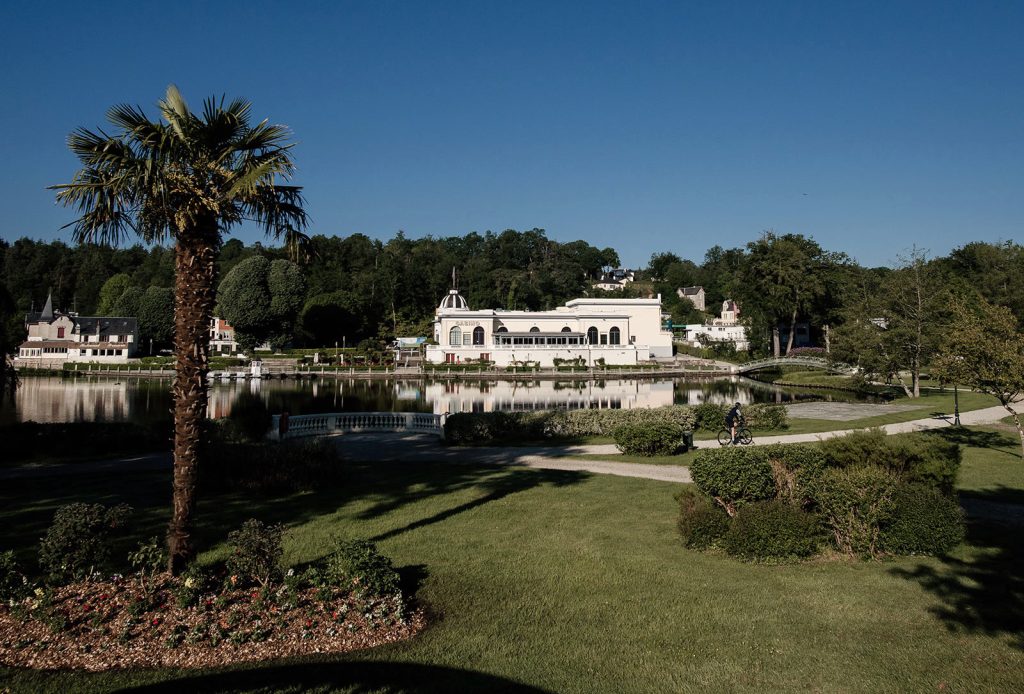
What makes the difference: Its gentle pace of life, wide-open spaces and brightly-coloured local stone.
3 places not to be missed during a weekend in the Orne:
- Alençon
- La Roche d’Oëtre, at the heart of the Suisse Normande
- The medieval town of Domfront
The Eure
What better ambassador could you want for Eure than our good friend Claude Monet? Once he had settled in Giverny, he created his own painting paradise in his gardens, complete with Japanese bridge, water lilies and explosion of colourful flowers. Downstream is the Château-Gaillard, Richard the Lionheart’s castle which overlooks the meanders of the River Seine. If you visit Evreux, we recommend a stroll along the Iton river which runs through the town. Evreux Cathedral is magnificent and dominates the city, and there is also a wonderful Italianate theatre.
What makes the difference: Its quaint villages along the left bank of the Seine and landscapes painted by the Impressionists.
3 places not to be missed during a weekend in the Eure:
- Giverny, best visited in low season
- Château Gaillard
- The Marais Vernier and its national nature reserve
Seine-Maritime
Vestiges of the Middle Ages are everywhere in this département, and most of all in the historic city centre of Rouen, popular for its many heritage sites, museums, restaurants, buzzing nightlife and riverside walks. Where the River Seine meets the English Channel is the great port city of Le Havre, rebuilt after the war by Auguste Perret in a revolutionary brutalist style. Here, discover the very place where Monet painted the emblematic painting that gave its name to Impressionism, Impression, sunrise. Other famous places captured on canvas in Seine-Maritime are the famous cliffs of Etretat, just 30 minutes away, and the ports of Fécamp and Dieppe further up the Alabaster Coast, all of which are well worth a visit.