Finding out about the Middle Ages in Normandy is to uncover 500 years of history, of war and rumours of war, invasions, battles, and larger than life, heroic personalities such as Rollo, William the Conqueror, Richard the Lionheart and Joan of Arc.
01
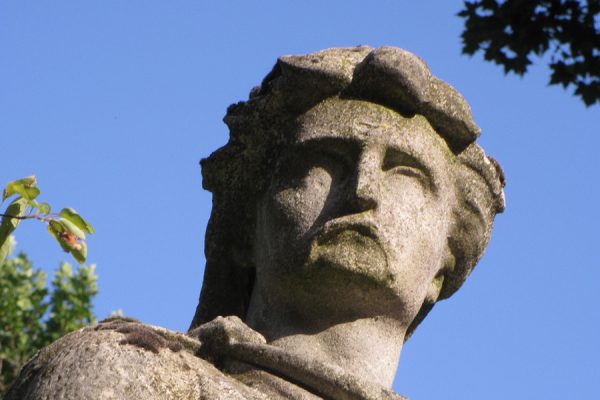
Rollo, Viking warlord (c. 860 – c. 930)
It all began in the very memorable year of 911 when the treaty of Saint-Clair-sur-Epte, signed off between Rollo and the unfortunately-named King Charles the Simple of West Francia, established the first frontiers of what became the Duchy of Normandy.
02
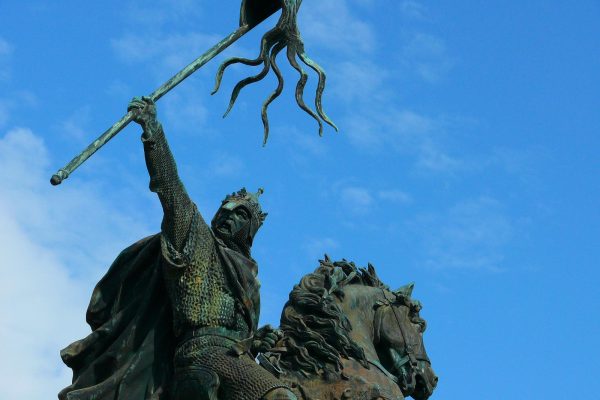
William the Conqueror (1027-1087)
The great-great-great-grandson of the Viking warlord Rollo, William the Conqueror, would vastly expand his ancestors’ tradition of constant territorial expansion – the kingdom of England would be his.
03
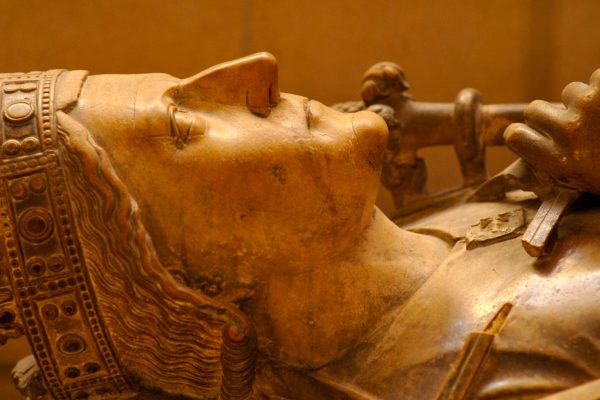
Richard the Lionheart (1157-1199)
In 1189, the great- great- grandson of William the Conqueror, Richard the Lionheart, son of Henry II of England and Eleanor of Aquitaine, ruled a kingdom through his parents’ marriage that stretched from the Pyrenees to the Scottish borders, encompassing England, Normandy, Aquitaine, Poitiers, Maine and Anjou. The French King Philippe-Auguste found this extremely annoying.
04
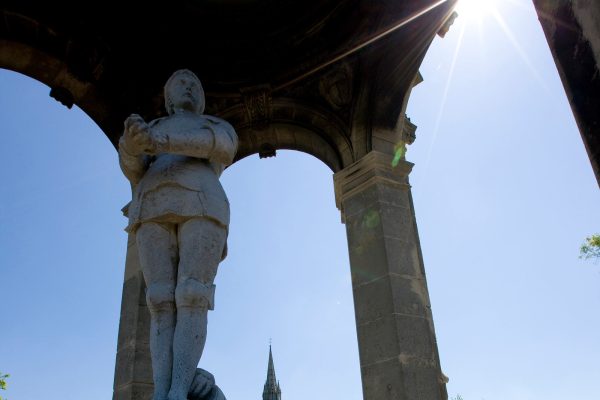
Joan of Arc (1412-1431)
This seminal figure in the history of the Hundred Years’ War, was tried for heresy, and condemned to death by burning in Rouen.
Other Key Figures to Remember
Matilda of Flanders (c. 1031–1083)
Daughter of the Count of Flanders, Matilda married William around 1051. During her husband’s long absences, including the conquest of England in 1066, she acted as regent of the Duchy of Normandy. A powerful and influential woman, she governed, oversaw state affairs and commissioned major building projects. She founded the Abbey of Sainte-Trinité, better known as the Abbaye aux Dames in Caen. Following her wishes, she was buried there in 1083, in the choir of the abbey church.
The Hautevilles: A Norman Family Conquers Southern Italy (11th–12th Centuries)
Hauteville-la-Guichard, in the Cotentin Peninsula, was the stronghold of Tancred of Hauteville, a relatively modest Norman lord. He had many sons but little land to pass on to them.
From the 1030s onwards, his sons headed to southern Italy, first as mercenaries and later as conquerors. In 1059, Robert Guiscard received from the Pope the title of Duke of Apulia, Calabria and Sicily, although he had not yet secured control of the island.
His brother, Roger I, completed the conquest of Sicily in 1091 after thirty years of military campaigns. In 1130, Roger II, Tancred’s grandson, was crowned King of Sicily and transformed his court into one of the most remarkable and culturally vibrant in medieval Western Europe.
Henry II Plantagenet (1133–1189)
The great-grandson of William the Conqueror, Henry II Plantagenet became Duke of Normandy in 1150 and King of England in 1154. In the meantime, he married Eleanor of Aquitaine in 1152, bringing vast territories south of the Loire under his control. His dominions eventually stretched from Ireland to the Pyrenees. Constantly on the move, Henry travelled tirelessly between his various lands, holding court across his empire, from Rouen to Winchester.