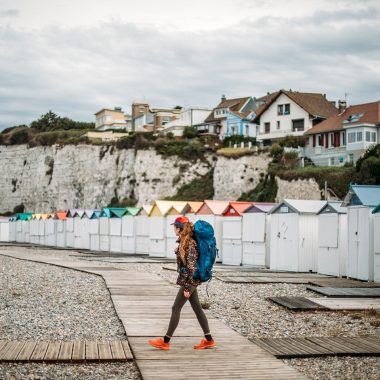
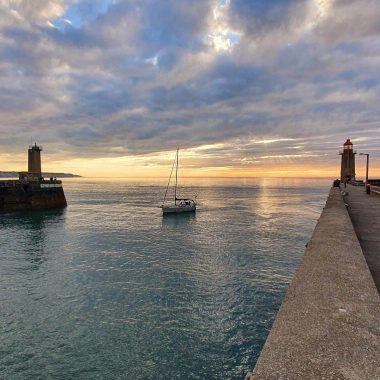
The Alabaster Coast stretches for 130 km from Le Tréport to Le Havre. The landscape alternates between cliffs and valleys where people have settled as close to the sea as possible. It’s hard not to fall in love with the coast’s high white cliffs bathed in the sun, the pebble beaches with their unmistakable sound, the small fishing villages nestling in the valleys and the port towns with their long history.
Normandy’s most beautiful cliffs
The cliffs of the Alabaster Coast are among the most famous and spectacular in France. Facing the sea, they rise to impressive heights and are often interspersed with small valleys and pebble beaches.
Alabaster
Alabaster is a white material that inspired the name of these white cliffs at the end of the 19th century. With the attraction of the coast and the creation of seaside resorts, the bourgeoisie had to be encouraged to come and bathe in Normandy. This is how the Flowered Coast, the Côte de Nacre and the Alabaster Coast were created.
The cliffs are made up of layers of limestone and flint with black and white stripes. The sea has sculpted some of the cliffs, creating gates, needles and caves such as those at Étretat.

The cliffs through the ages
Parts of the cliffs regularly collapse, exposing their base to the tide twice a day. Flint that has fallen or been torn away is then polished by the waves and wind. That’s how the pebble beaches of this coast came to be. A coastal palette of white, grey, blue and green. Pebbles are essential for protecting coastal communities from flooding, as they act as a barrier against the waves. It is forbidden to pick them up on pain of a fine.
Valleys galore!
Many towns and villages are nestled in the valleys carved out by the coastal rivers, such as Fécamp and Dieppe, but also Le Tréport and Veules-les-Roses, which has the shortest river in France. More typical of the region is the access to the sea via a valleuse, a suspended and sloping valley high above the beach. The valleys near Varengeville-sur-Mer are very popular, such as the Vasterival valley and the Gorge des Moutiers, both of which can be reached by climbing stairs. But you can find many others all along the coast!

The world-famous cliffs of Étretat
- The cliff of Aval: the top (85m) can be reached by a path and then a staircase on the left of the dyke. This magnificent cliff is bordered by a footpath, the GR21, which runs from Le Tréport to Le Havre. A stunning golf course overlooks the sea.
- The Porte d’Aval: the pride of Etretat, one of the natural wonders of the world.
- L’Aiguille (the Needle): an obelisk carved by the sea and time, standing 70m high.
- The Manneporte: An imposing arch, it was also one of Claude Monet’s favourite subjects.
Conservation and awareness-raising
Due to erosion and coastal retreat, this famous Normandy coastline must be preserved. The aim is to respect this unique natural heritage while allowing visitors to continue to enjoy its spectacular landscapes:
- Stay away from cliff edges
- Protect the beaches by not picking up pebbles
- Stay on marked paths
- Respect private property
- Take care of your litter
- Head to the beach at the beginning and end of the day
- Use public transport, walk or cycle whenever possible
Unmissable sites on the Alabaster Coast
Fécamp
Framed by the impressive white cliffs of the Alabaster Coast, this historic seaside town was home to the Dukes of Normandy until 1204. A fishing port, seaside resort, artistic and religious pilgrimage site, and home to the famous Benedictine liqueur, Fécamp oozes authenticity and a way of life connected to the sea. Tradition and maritime…
Find out more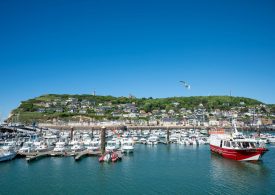
Dieppe
With its deep harbour protected by white cliffs, Dieppe has long been a favourite destination for cross-Channel visitors. As for daring Dieppe sailors, they explored the globe. Learn about the town’s history at Dieppe Castle and in the memorial museum dedicated to the tragic Dieppe Raid of 1942. Head for the beach, quays and restaurants,…
Find out more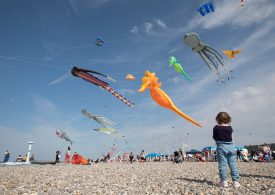
Le Havre
Visiting Le Havre means discovering a city like no other. In July 2005, UNESCO listed the city centre, rebuilt by Auguste Perret, as a World Heritage Site. This unique, resolutely modern city by the sea may well surprise you! Why should you visit Le Havre? A modern city with seaside vibes To this day, Le…
Find out more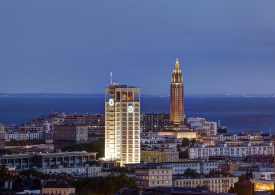
Eu – Le Tréport
Sister towns Eu and Le Tréport form the easternmost seaside resort of the Alabaster Coast and Normandy. Each of these two towns enjoys its own distinct character, atmosphere and history. Two towns with a strong character Eu arguably has the longest history in Normandy besides Rouen. A former Gallo-Roman town backing onto a vast and…
Find out more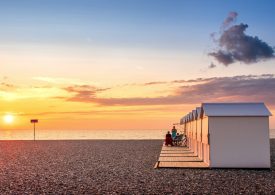
Étretat
Nature has carved unusual shapes out of the white cliffs in Etretat, and as a result, this picturesque spot attracted many Impressionist painters, who sought to capture the cliffs on canvas. The pretty seaside town of Etretat is also the setting for Maurice Leblanc’s popular French children’s book about Arsène Lupin, the gentleman burglar. Two…
Find out more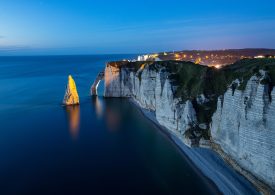
Veules-les-Roses
With quaint restaurants, idyllic half-timbered cottages, mills along the river, fantastic seaside walks and delicious local oysters, Veules-les-Roses provides the perfect backdrop for a relaxing coastal escape. A charming seaside village Tucked away on the Alabaster Coast, just 12 miles south-west of Dieppe, the picturesque village of Veules-les-Roses is a cluster of typical half-timbered cottages…
Find out more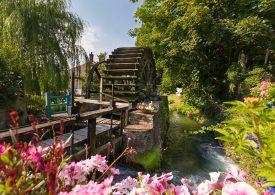
As well as the fishing towns and Étretat, do not hesitate to explore hidden gems. At Saint-Jouin-Bruneval, you’ll feel like you’re at the end of the world: a road leads down to the sea at the foot of the cliffs, then a flight of steps allows you to climb the cliffs and enjoy the view. Yport is Étretat’s little sister, where fishermen’s houses and holiday homes stand side by side and boat-shaped votive offerings adorn the village church.
A little further inland is Valmont, where Delacroix stayed, with its abbey, private chateau and walks. Do not miss Veules-les-Roses, one of France’s most beautiful villages, where the river and thatched cottages lead to the sea. Or Les Petites Dalles, where you can admire the seaside architecture and be tempted by the sound of the waves, where Sissi used to bathe.
By train, by bike or on foot
Our recommendations for your trip
Explore Normandy at your own pace and enjoy a more responsible holiday. You’ll also find some of our best addresses: hotels, restaurants and places to visit, all accessible without a car.