Of all the Dukes of Normandy, William the Conqueror is undoubtedly the most famous and fascinating. His figure is firmly rooted in our medieval imagination. But apart from his greatest military achievement, the conquest of England in 1066, do we really know him?
William the Bastard: why such a nickname?
Descended from a line of powerful Scandinavian lords, William was born at Falaise Castle in 1027. He was the illegitimate son of Robert the Magnificent, Duke of Normandy, and Arlette, a tanner’s daughter. A bastard in the eyes of the Church, his origins were in keeping with the Norman customs of the time, when multiple concubines were allowed in these more danico (Danish) unions.

Tempestuous youth
When his father passed away in 1035, William became Duke of Normandy at the age of 8. Although he was recognised as the heir to the dukedom, many of the Norman lords revolted in their quest for power, and a veritable manhunt began in Normandy. For many years William was forced to flee on epic journeys, taking refuge in castles and fortresses to escape assassination attempts against him. He finally succeeded in crushing the rebellion at the Battle of Val ès Dunes in 1047. From this troubled youth, William developed a steely temperament and great caution in his relationships.
Mathilda: a marriage of love or reason?
Around 1052, William married a distant cousin, Matilda of Flanders. Daughter of the Count of Flanders and maternal descendant of Hugues Capet, she represented a marriage of the first order and a fine revenge after years of disputed legitimacy. Above all, however, it was a union sealed by passionate love. After suffering as a bastard, William remained faithful to Mathilde all his life – a rare occurrence in those days! As proof of this undying love, she bore him at least ten children, acted as regent in Normandy during her husband’s absence and was even crowned Queen of England in 1068!
A builder at heart
However, this marriage was forbidden by the Church, particularly because of the couple’s consanguinity. To make amends, the couple founded two magnificent abbeys in Caen: the Abbaye aux Hommes (Men’s Abbey) and the Abbaye aux Dames (Women’s Abbey). These abbeys were not the only buildings to be erected. As duke, William consolidated his authority by building castles (Caen, Lillebonne, Bonneville-sur-Touques…) and his spiritual power by encouraging the construction of monasteries throughout Normandy.

1066, year of the conquest
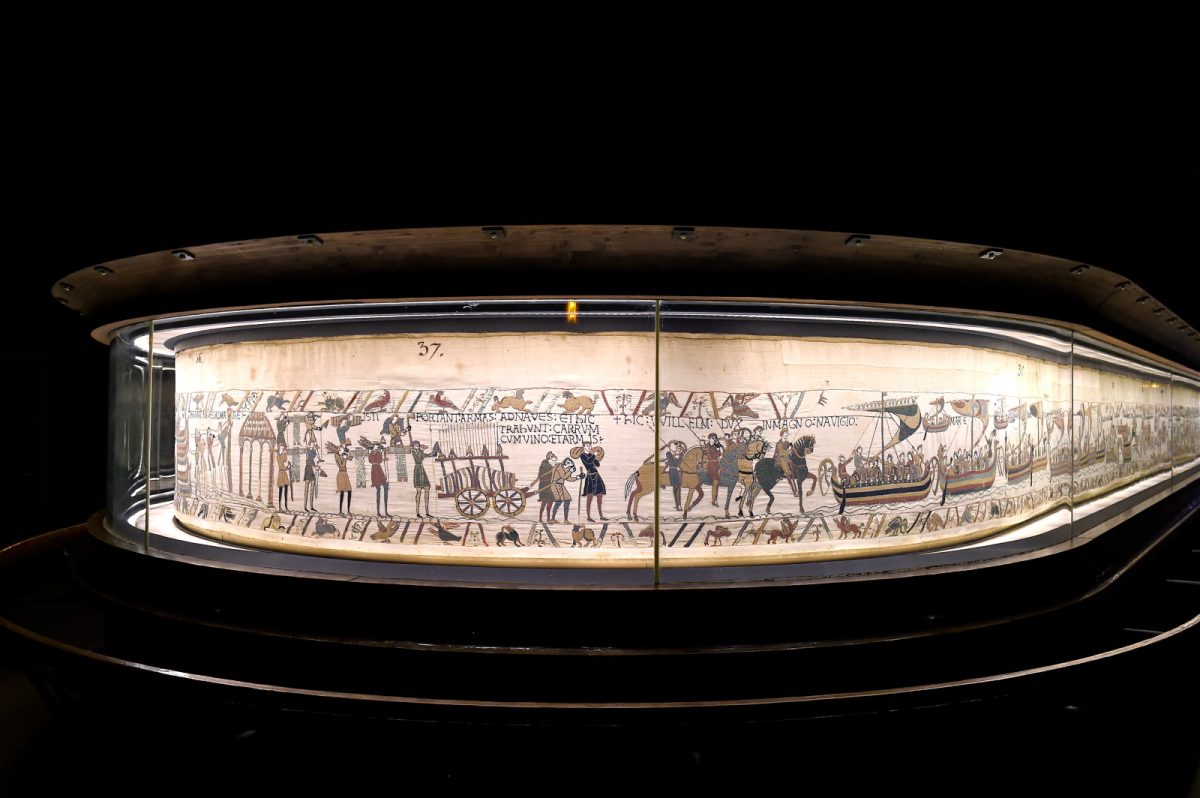
The remarkable Bayeux Tapestry perfectly illustrates the story of the conquest of England. After the death of King Edward the Confessor, William decided to launch an invasion from Normandy to reclaim the throne that was his but had been seized by Harold, the late king’s brother-in-law. To achieve this goal, William created a vast coalition to build a fleet and an army. Had he relied solely on himself, William would never have been able to undertake such an expedition. He had only one ship, the Mora, given to him by his wife. The rest of the fleet, nearly a thousand boats, were built especially for this incredible crossing.
An unrivalled reformer
On becoming King of England in 1066, William set about establishing a solid and efficient administration. To achieve this, he pushed out abbots and bishops of Saxon origin and replaced them with clerics from Normandy who were familiar with William’s demands. These Norman clerics also gradually imposed their architectural style throughout England, being responsible for the construction of some famous buildings: the Tower of London and the cathedrals of Norwich, Durham and Winchester to name a few.
A final relic
Although William’s life was filled with heroic victories, he died in tragic circumstances. In the summer of 1087, while fighting the troops of the King of France in Mantes-la-Jolie, he was seriously wounded by his own horse. He was taken to Rouen, where he lay dying for several weeks, despite having taken the precaution of settling his succession. After his death, he was buried as he had wished in the abbey church of Saint-Etienne in Caen. Although his tomb can still be seen, it unfortunately sounds a little hollow. Plundered in 1562 during the Wars of Religion, it now contains only the Conqueror’s left thigh bone, all the other bones having been stolen by the Protestants.
A different way to discover medieval history
Our selection of Normandy Experiences
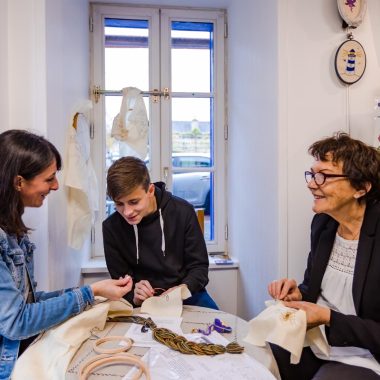
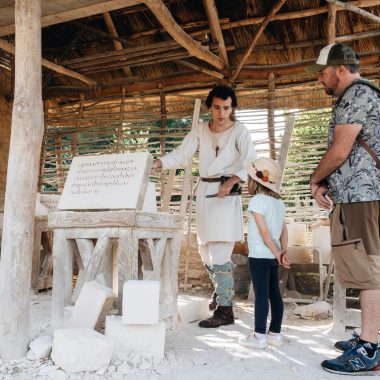
Normandy Experiences are local gems that add meaning to your trip. You’ll meet Normandy people who are truly passionate about what they do.
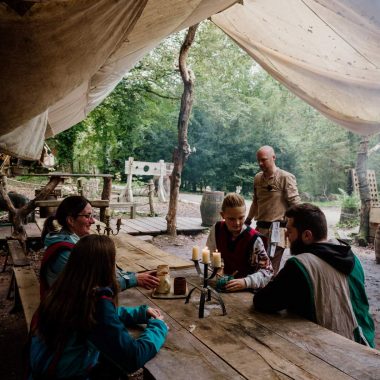
Viking adventures at Parc Ornavik
Hérouville-Saint-Clair
Thematics