
Over the interminable summer of 1944, beginning on 6 June, men from around the world were drawn into a bloody conflict that was fought out in Normandy. For the Allies the issue was the obliteration of Nazi tyranny, and for the Western Alliance a return to freedom.
Normandy in all seasons
We will remember them

Normandy bears the marks of the passing of this battle in the form of the many cemeteries across the region where the memory of those who fell is kept alive: British, Americans, Canadians, Poles, Australians, New Zealanders, French, Belgians. The Norwegians, Dutch, and other Allies who fought alongside them are also honoured in the many ceremonies held each summer. The suffering of the local population in Normandy should not be forgotten either as the fighting and bombing produced civilian death and destruction on a huge scale. Then there are the German cemeteries….
What follows invites you to reflect upon this terrible page of history by visiting – or re-visiting – the D-Day Landing Beaches, the many cemeteries, battlefield sites, and museums relating to D-Day and the Battle of Normandy. Freedom is not free, it has a price, and it had to be fought for and defended. We, our children and grandchildren, still enjoy the first fruits of peace, reconciliation and freedom, and here in Normandy we are best placed to make your stay meaningful.
- THE MAIN PHASES OF D-DAY AND THE BATTLE OF NORMANDY
Americans, British, Canadians, Belgians, Danes, Dutch, Norwegians, Poles, Australians and French fought together for almost 100 days on the beaches and lands of Normandy during the Battle of Normandy.
- THE D-DAY LANDING BEACHES
In Calvados and the south of La Manche, the D-Day landing beaches (Sword, Juno, Gold, Omaha and Utah) are unmissable places to visit. Beyond them, many of the region’s landscapes still bear the scars of war, making Normandy an open-air museum.
- WHAT TO VISIT?
Normandy has 29 cemeteries, 21 memorials and 44 museums dedicated to D-Day. These places of remembrance also help to make the region a land that embodies the fundamental values of reconciliation, peace and freedom.
- SPEND LESS WITH THE EXPLORE NORMANDY PASS
For just 1 euro, make the most of the reductions on offer with the Explore Normandy Pass on entry tickets and in the shops of museums and sites linked to the D-Day Landings and the Battle of Normandy.
Not to be missed
Major events
D-Day Festival Normandy
30 May 14 June 2026
Each year around 6 June, the tourist offices of the D-Day Landing Beaches area invite you to celebrate freedom! During the D-Day Festival Normandy, visitors will enjoy a popular programme of festive and cultural events to mark the anniversary of the Allied landings in Normandy on 6 June 1944. The D-Day Festival Normandy takes place…

83rd Anniversary of D-Day and the Battle of Normandy
29 May 13 June 2027
Normandy commemorates this tragic period of world history every single year. 2027 will mark the 83rd Anniversary of D-Day and the Battle of Normandy, and with it, yet another occasion to celebrate peace, liberty, and reconciliation. The 83rd Anniversary of D-Day and the Battle of Normandy will see increased collaboration with international partners and veterans’…
Our suggestions
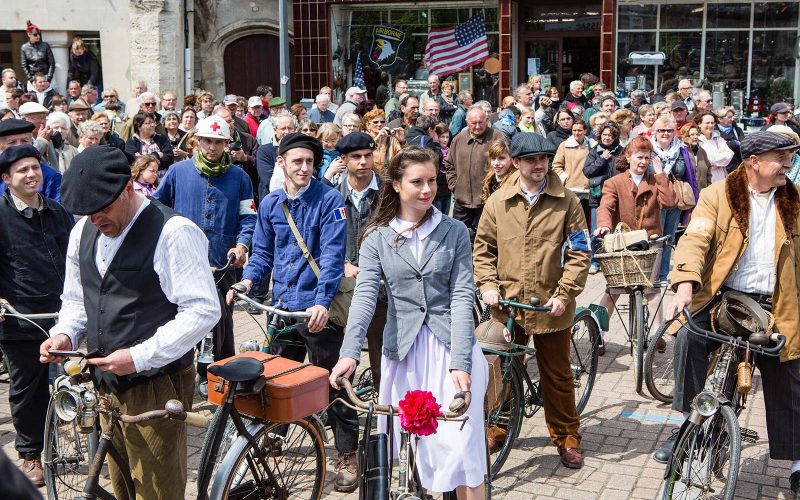
D-Day breaks
Explore Normandy at your own pace and enjoy a more responsible holiday. You’ll also find some of our best addresses: hotels, restaurants and places to visit, all accessible without a car.


What to see and do with children?
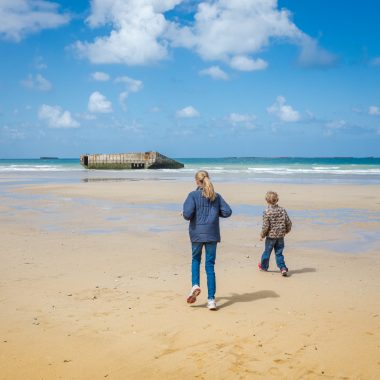
D-Day with your family

Why? Visiting the D-Day Landings area as a family means learning, understanding and paying tribute. It’s also a way of sharing in the duty of remembrance and passing on the legacy to younger generations.
How? Many sites and museums offer specially adapted tours. Archives, period artefacts, reconstructions and interactive tools provide a better understanding of the historical context and key stages of the D-Day landings and the Battle of Normandy.
Discover the D-Day in a different way
Normandy Experiences to explore D-Day & the Battle of Normandy
Normandy Experiences are unique local activities that will bring depth and meaning to your journey. Meet passionate and inspiring Normans along the way as you explore Normandy off the beaten path
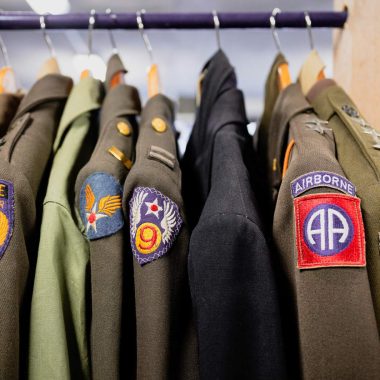
Behind-the-Scenes Tour at the Airborne Museum
Sainte-Mère-Église
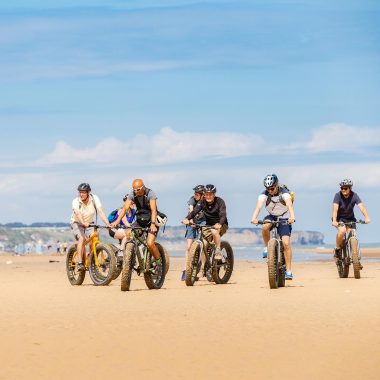
Saint-Laurent-sur-Mer

Courseulles-sur-Mer
Preserving values
Peace, Freedom and Sharing
Normandy is deeply attached to peace, the peace of peoples who, every year, come together to remember that freedom has a price, the price paid by soldiers of all nations, and by the civilians of the region. We want to tell this story and, above all, pass it on. To all generations. How can we do this? Through visits to places of remembrance, exchanges, teaching and the testimonies of veterans.
Normandy Battlefields for Peace
Normandy Battlefields for Peace is a meaningful initiative which aims to collect donations from visitors to Normandy’s D-Day sites for a humanitarian NGO. These contributions will support humanitarian efforts in areas of conflict.
Normandy, land of Liberty
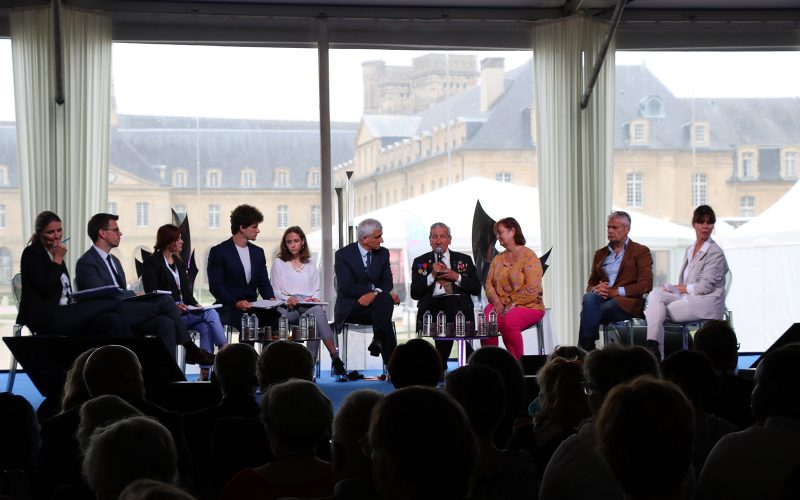
Normandy works to keep the duty of remembrance alive, notably by organising the Normandy for Peace World Forum, which takes place in Caen.
Normandy World Peace Forum
09 April 10 April 2026
The Normandy for Peace World Forum takes place every two year and brings people together from around the world to reflect on issues such as current tensions and peacekeeping. It is more than just a talking shop, it is also a time to reflect on how to build a better world. The 8th edition will take…
Answers to your questions
How many men took part in the D-Day landings?
On 6 June 1944, almost 156,000 men landed in Normandy, mainly by sea but also from the air. 20,000 vehicles, 5,000 boats, 4,000 landing barges, 130 warships and 12,000 aircraft were mobilised.
Where should you visit Normandy for D-Day?
The D-Day area stretches from Ouistreham in Calvados to Sainte-Marie-du-Mont in La Manche. Stretching for almost 80km, this area has been shaped by history and is home to numerous places of remembrance, including cemeteries, memorials and D-Day museums. Inland, other sites offer a better understanding of the Battle of Normandy, which lasted almost 100 days following D-Day.
Our D-Day and Battle of Normandy guide
Our 1944 D-Day visitors’ guide helps you plan your trip, providing all the latest information you might need regarding major battlefield sites, military cemeteries, museums and wartime infrastructure. Destination D-Day 1944 – read all about it!
D-Day 1944 – Visitor guide