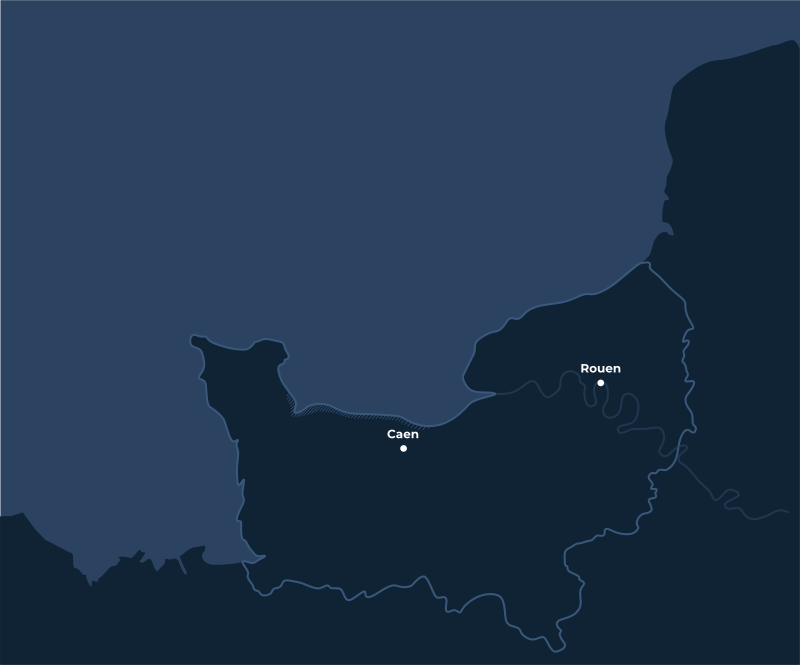
While Normandy is often associated with the largest amphibious and airborne military operation in history, the 1944 D-Day Landings, the region also preserves remarkable architectural treasures from the Middle Ages. Join us on a journey through Normandy’s most iconic medieval towns, where cobbled streets and historic landmarks transport visitors centuries back in time.
How Long Did the Middle Ages Last?
The Middle Ages spanned from the 5th to the 15th century. The term was coined by Renaissance scholars, who viewed this period as an era of decline and barbarism between the glory of Classical Antiquity and the Renaissance.
Manche
The Beginning of the Middle Ages: Mont-Saint-Michel
For anyone wondering whether Mont-Saint-Michel is truly medieval, the answer is yes.
The history of this architectural masterpiece, set within the extraordinary natural environment of Mont-Saint-Michel Bay, home to some of the highest tides in Western Europe, dates back to the year 708. Originally known as Mont Tombe, it was later commonly referred to by medieval clerics as “Mont-Saint-Michel au péril de la mer” (“Mont-Saint-Michel at the peril of the sea”). During the Hundred Years’ War, the island successfully withstood English sieges and became a powerful symbol of victory for the Kingdom of France. Wander through its winding cobbled streets, visit the magnificent abbey, and immerse yourself in the unique atmosphere of this rocky island fortress whose silhouette has captivated visitors for centuries.


Calvados
Falaise and Caen: Forever Linked to William the Conqueror
William the Conqueror was born around 1027 (the exact date remains unknown) in Falaise, in southern Calvados. He was the son of Robert the Magnificent, Duke of Normandy, and Arlette, a commoner. William became one of the Middle Ages’ most iconic figures. Although Edward the Confessor had promised him the English throne, William was ultimately outmaneuvered by Harold, his former vassal. Determined to claim his inheritance, William launched the Norman Conquest of England. Setting sail with a fleet of approximately 700 ships from Dives-sur-Mer nearby Cherboug, he crossed the Channel and became King of England. A visit to the impressive William the Conqueror’s Castle in Falaise, dramatically perched on a rocky promontory, is an absolute must.
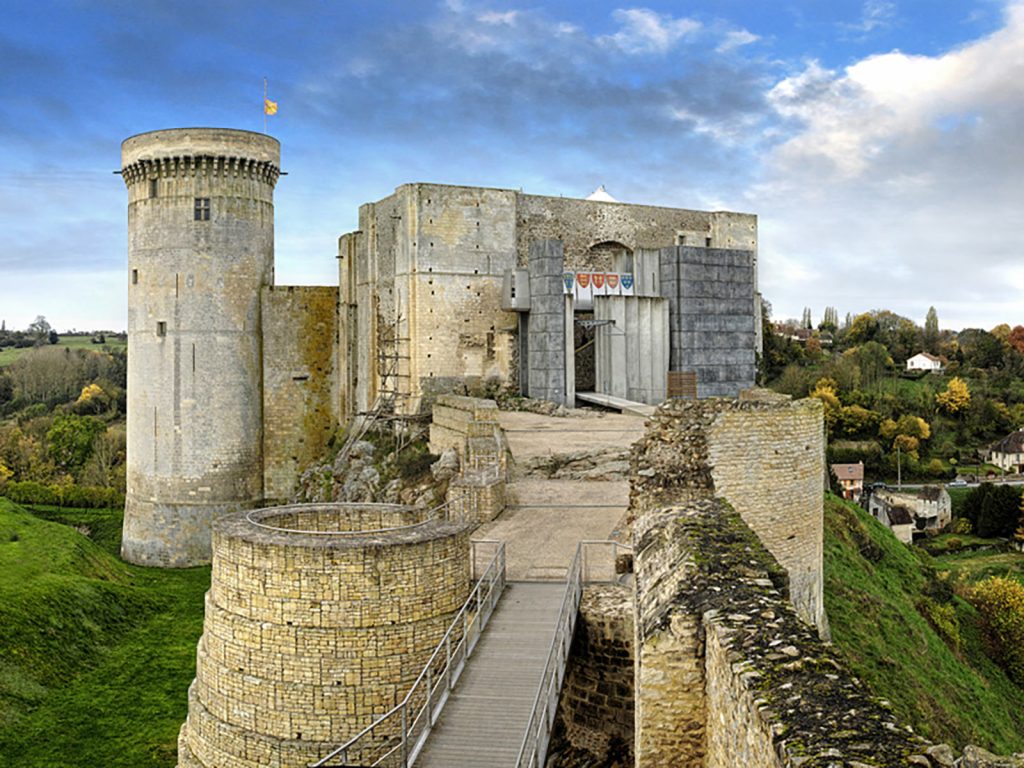

Caen: Its Castle and Two Abbeys Built by William & Matilda
Just a short distance away in Caen, William and his wife Matilda commissioned one of Europe’s largest medieval fortresses, along with two magnificent abbeys: Abbaye aux Hommes and Abbaye aux Dames. Today, Caen Castle is home to two museums: one dedicated to Normandy’s history and another devoted to fine arts. For lunch or dinner, head to the medieval Vaugueux district, where charming cobbled streets are lined with restaurants and cafés.
Seine-Maritime
Rouen and Its Half-Timbered Houses
If there is one major Norman city where the medieval past remains strikingly visible, it is Rouen. Its historic centre boasts an extraordinary collection of medieval architecture, particularly its famous half-timbered houses. The city’s tourist office even highlights five of these remarkable medieval homes. Construction of the magnificent Notre-Dame Cathedral began in the mid-12th century. Before that, a Romanesque cathedral stood on the site and was consecrated in 1063 in the presence of the Duke of Normandy—the future William the Conqueror himself.

A Heroine, a Rare Clock Mechanism and a Historic Ossuary
In the heart of the city stands the Donjon, also known as Joan of Arc’s Tower. Although Joan of Arc was not imprisoned in this tower, it served as the keep of Rouen Castle, built by Philip Augustus after 1204. It is the only surviving part of the fortress where Joan was held before her trial. She was executed in 1431 on the Place du Vieux-Marché. Today, the innovative Historial Jeanne d’Arc museum is dedicated to her story. The city celebrates her memory each year during the Joan of Arc Festivals. Also in the city centre, the Gros-Horloge, built at the end of the Middle Ages, features one of Europe’s oldest and rarest clock mechanisms. Another medieval landmark not to be missed is the Aître Saint-Maclou. Originally created as a cemetery during the devastating Black Death, it has since become a vibrant cultural hub.
Calvados
Bayeux and Its Majestic Cathedral

Located just minutes from the D-Day Landing Beaches, Bayeux miraculously escaped the destruction of 1944. Its remarkably preserved medieval heritage invites visitors to explore its picturesque cobbled streets and its impressive cathedral, consecrated in 1077 in the presence of William the Conqueror and Queen Matilda. During the Middle Ages, Bayeux was Normandy’s second most important town after Rouen. It is easy to imagine tanners and dyers working along the banks of the River Aure, which flows through the town. No visit would be complete without seeing the world-famous Bayeux Tapestry, a 70-metre embroidered masterpiece recounting William’s conquest of England.
Calvados
Honfleur and Its Picturesque Harbour
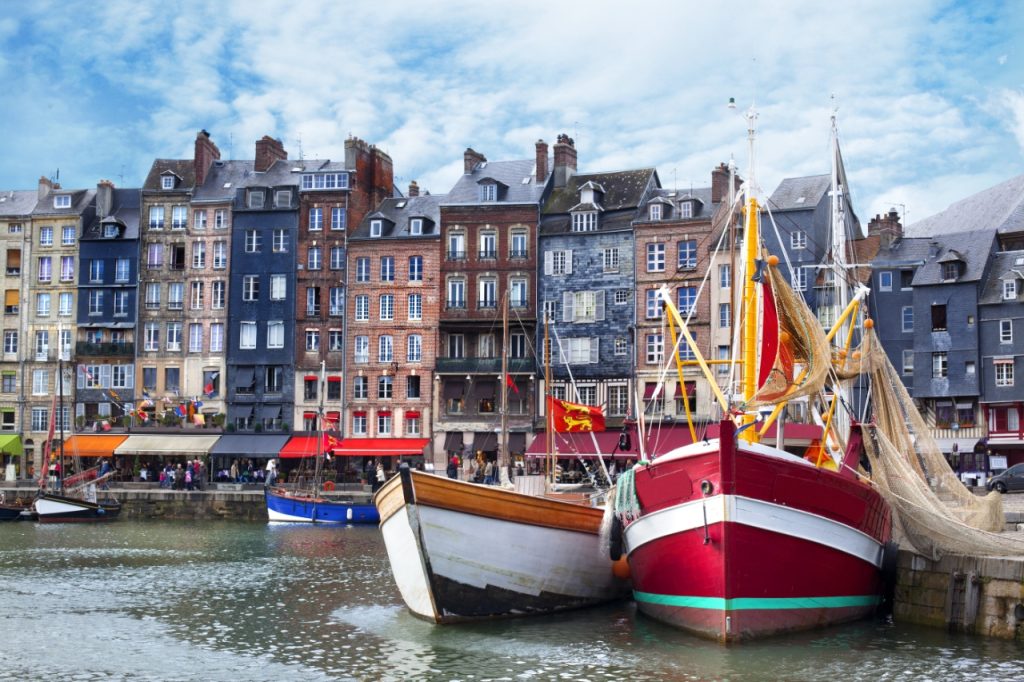
his charming medieval town truly lives up to its postcard-perfect reputation. Its photogenic Vieux Bassin (Old Harbour) is the heart of the town, framed by narrow slate-clad houses and colourful fishing boats. Autumn and winter reveal Honfleur’s medieval atmosphere at its most authentic. Visitors interested in medieval heritage should note that Saint Stephen’s Church, in the town centre, may date back to the 11th century. Nearby, the Manoir du Désert in Gonneville-sur-Honfleur dates from the late Middle Ages.
Seine-Maritime
Jumièges: The Most Beautiful Ruins in France
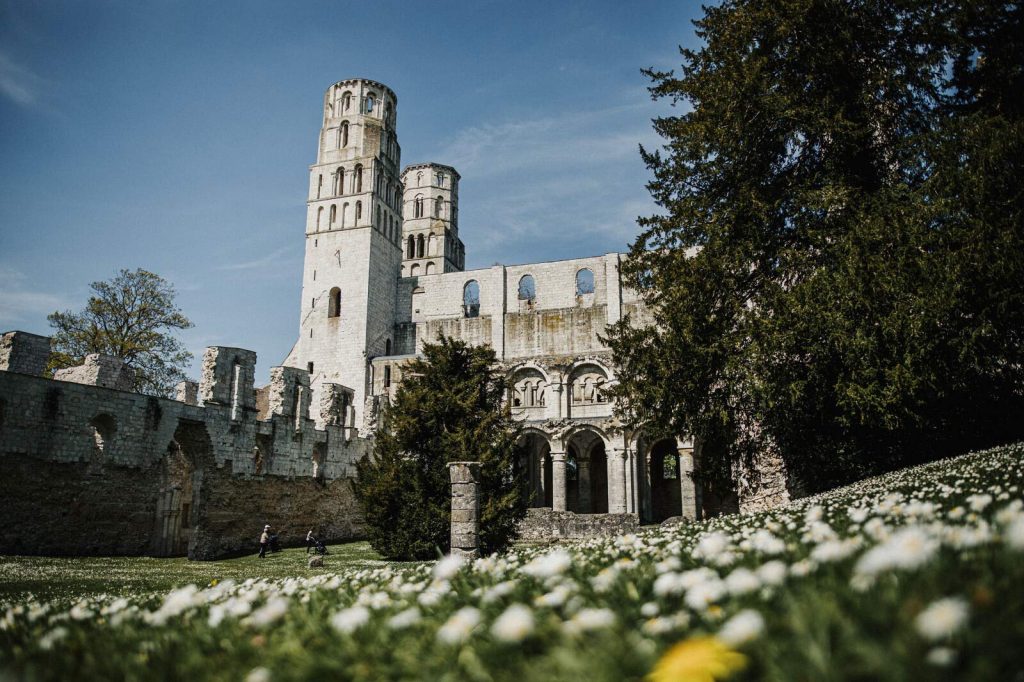
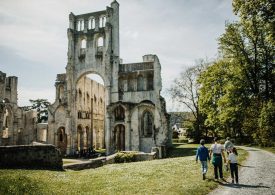
Victor Hugo is said to have described Jumièges as “the most beautiful ruins in France”, and it is easy to understand why. Nestled within a bend of the River Seine, the site possesses an almost mystical atmosphere. One of the oldest and most important monasteries in Western Europe, Jumièges Abbey was founded in 654 by Saint Philibert, a courtier of the renowned King Dagobert I.
Eure
Château Gaillard and Its Spectacular Seine View

Staying close to the Seine, we arrive at one of Normandy’s most photogenic castles. Between 1196 and 1198, Richard the Lionheart, King of England and Duke of Normandy, built Château Gaillard on the top of a cliff to defend the duchy and its capital, Rouen. A masterpiece of military architecture far ahead of its time, the fortress nevertheless fell to the armies of Philip Augustus in 1204. Overlooking a dramatic bend in the Seine, the ruins of Château Gaillard are an essential stop for anyone fascinated by medieval history. Guided tours and events are held throughout the year.
Orne
Domfront: A Charming Medieval Town

Last but certainly not least, the town of Domfront in the Orne department has retained a remarkably authentic medieval urban layout. Narrow streets, covered passageways, and hidden courtyards all contribute to its unique character. Notable historical figures, including Eleanor of Aquitaine, Richard the Lionheart, and King John, all stayed here at various times. The impressive ruins of Domfront Castle, dating from the 12th century, bear witness to the strategic defensive role it played within the Duchy of Normandy. Another medieval treasure worth visiting is Notre-Dame-sur-l’Eau Church.
Explore more

Discover Medieval Normandy in a Different Way
Our Selection of Norman Experiences Inspired by the Middle Ages
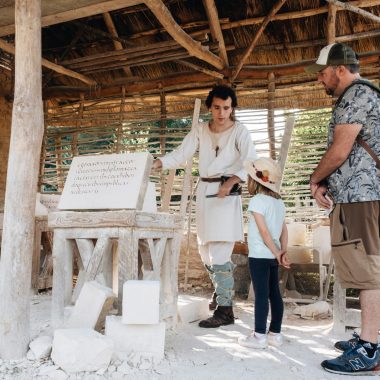
Viking adventures at Parc Ornavik
Hérouville-Saint-Clair
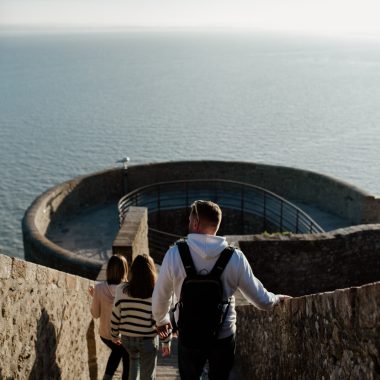
Visiting the Mont-Saint-Michel during High Tides: a Must-See Natural Phenomenon
Le Mont-Saint-Michel