

Utah Beach is situated in the American sector, a name code assigned by the Allies during the pivotal D-Day liberation of Normandy. This iconic stretch of coastline extends from Sainte-Marie-du-Mont to Quinéville in the Manche region, inviting visitors to explore its profound historical significance and connect with the stories of bravery that shaped the course of history.
The assault on Utah Beach

The eastern part of the Cotentin is a landscape of low-lying, marshy land that experiences seasonal flooding each winter. Along the coast, wide sandy beaches are framed by a line of dunes, which separate them from the marshlands accessible by raised paths called “chaussées.”
This area is particularly well-suited for an amphibious assault, a fact not lost on Marshal Rommel, who made numerous visits to the site to reinforce the defences in anticipation of an Allied invasion. As a result, the dunes stretching between the Baie des Veys and Saint-Vaast-la-Hougue are dotted with approximately thirty “resistance nests,” known as Widerstandsnesten (WN), designed to repel any incoming forces. Additionally, in the elevated regions of the hinterland, several heavy artillery batteries were established to support these coastal fortifications, with notable installations at Azeville, Crisbec, Morsalines, and La Pernelle. This intricate web of defensive positions was a crucial element in the German strategy to protect their positions during the tumultuous events of D-Day.
In their initial plans, the Allies did not intend to land on the Cotentin coast. It was only in December 1943 that Eisenhower and Montgomery made the pivotal decision to add an additional beach to those already selected along the Calvados coastline. This new landing site, located to the west of the Baie des Veys, was aimed at facilitating a quicker capture of the strategic port of Cherbourg. Designated as Utah Beach, it stretches from Sainte-Marie-du-Mont to Quinéville, with an assault zone of approximately two kilometres at Vareville. To secure this critical area, Allied high command planned to drop two divisions of paratroopers on the night before the landing. Their mission was clear: to thwart any German counterattacks aimed at the beaches, ensuring a successful operation for the forces landing at dawn.
What to visit in the American sector of Utah Beach?
01
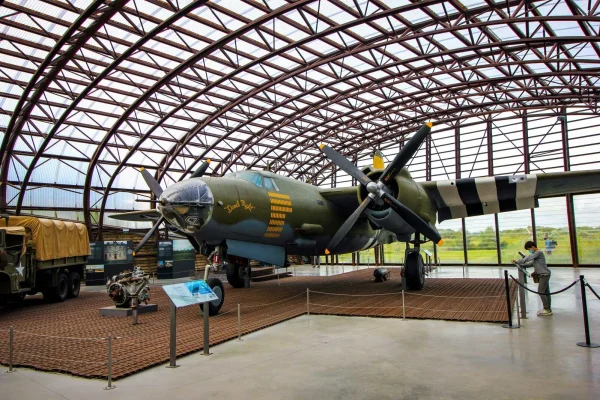
D-Day museum in Utah Beach
Built on the very site where American troops landed on June 6, 1944, the D-Day Museum narrates the events of D-Day in 10 sequences, from its preparation to its execution and ultimate success.
02
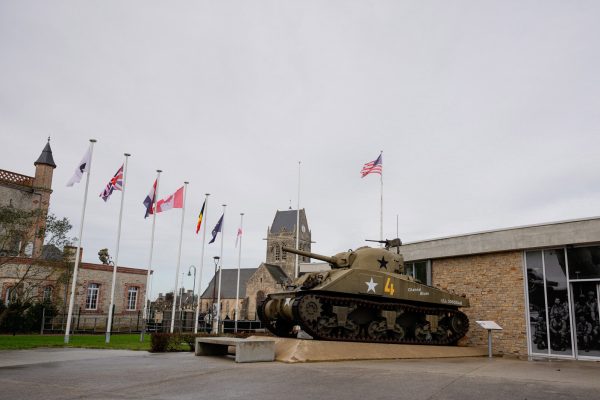
Airborne Museum
In the heart of Sainte-Mère-Église, the museum guides you in the footsteps of the American paratroopers of D-Day, members of the 82nd and 101st Airborne Divisions.
The Airborne Museum is located in the square of the church where paratrooper John Steele was left hanging during the night of June 5 to 6, 1944.
03
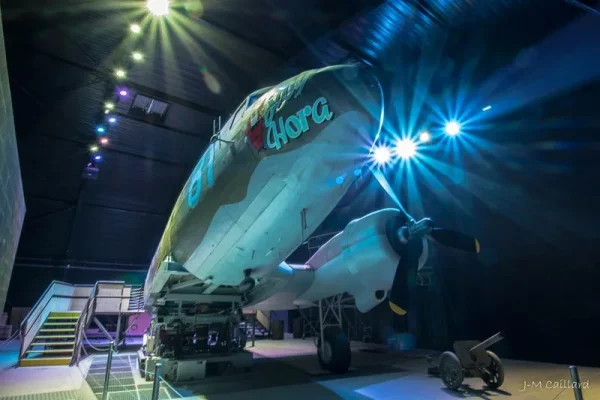
D-DAY Experience
Experience an immersive and exhilarating visit by taking your seat aboard an authentic C-47 aircraft converted into a flight simulator, allowing you to relive the thrilling crossing of the English Channel!
04
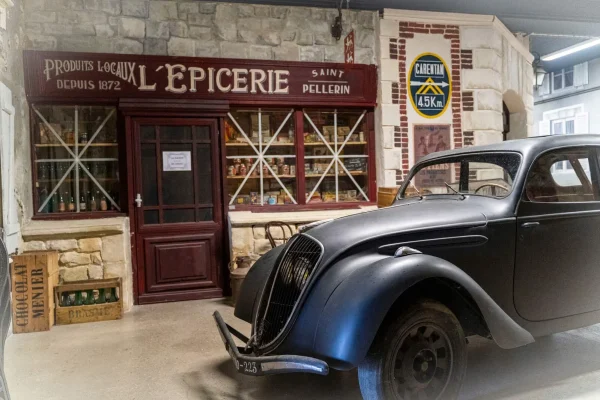
Normandy Victory Museum
Situated just outside Carentan, the Normandy Victory Museum brings to life the experiences of soldiers and civilians during the hedgerow battles of 1944, with around thirty dynamic displays showcasing their stories and struggles.
05
Batterie d’Azeville
Built between 1942 and 1944 by the Todt organisation, located 4,35 miles north of Sainte-Mère-Eglise and 3.10 miles back from the beach, the Azeville battery is one of the main fortifications of the Atlantic Wall and was built inland, to protect beaches of the Eastern coast of the Cotentin Peninsula. Provided with an impressive complex…
More information
06
Airship Hangar
The hangar was built by the french national navy as a shelter for the airships, used to spot the german submarines during the first world war. After the german occupation, it was used by the Americans who left there numerous and outstanding graffitis. Unique in Europe, the visit of this huge building is in 2…
More information
07
Batterie de Crisbecq
This unique 4 hectare site in France, offers visitors about 21 bunkers, blockhouses and artillery over one kilometer to see.
More information
08
World War II Museum
Located north of Utah Beach, the Memorial de la Liberté Retrouvée presents a chronological path through the Second World War in Normandy in an area of over 1000m² modern exhibition space. The very particular them of the daily life in France under the Occupation includes lively and realistice scenes which will plunge you back into…
More information
Experience D-Day from a new perspective!
Our selection of Normandy Experiences
Normandy Experiences are unique local activities that will bring depth and meaning to your journey. Meet passionate and inspiring Normans along the way as you explore Normandy off the beaten path
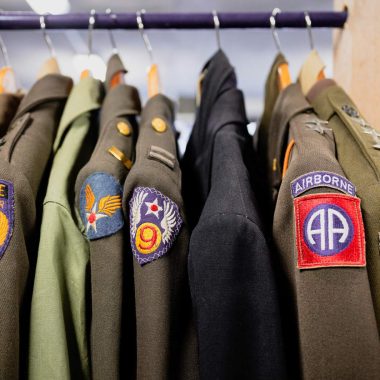
Behind-the-Scenes Tour at the Airborne Museum
Sainte-Mère-Église

Jeep Ride through History: Tracing the 101st Airborne
Sainte-Marie-du-Mont
Travel by train, bike, or on foot
Our recommended trips
Explore Normandy at your own pace and enjoy a more sustainable stay. Discover our top picks for hotels, restaurants, and attractions, all conveniently accessible without a car.



Useful Information for your trip

Save up on attractions with the Explore Normandy Pass!
Visit more and spend less with the Explore Normandy Pass! Gain free access to exclusive content and, for just €1, enjoy exceptional discounts at over 70 sites and museums dedicated to D-Day in Normandy.
Frequently Asked Questions
What is the origin of the name Utah Beach?
The American beaches of Utah and Omaha were named after the hometowns of two American non-commissioned officers who participated in the operations during D-Day.
Who landed on Utah Beach?
Almost 23,000 men from the American forces landed on Utah Beach on the morning of June 6, 1944.
What is the nearest major city to Utah Beach?
Utah Beach is the westernmost of the five D-Day landing beaches. It is located in the Manche department on the east coast. Nearby are the towns of Sainte-Mère-Église and Sainte-Marie-du-Mont. The closest city is Carentan, which is accessible by train on the Paris-Caen-Cherbourg line or by ferry from the UK on the Poole or Portsmouth to Cherbourg route.