Caen, Rouen, Le Havre: Normandy’s largest cities are on a human-scale, close to the sea or a river. In which area of Normandy are they located? How many people live in them? What is their history and heritage?
Caen (Calvados)
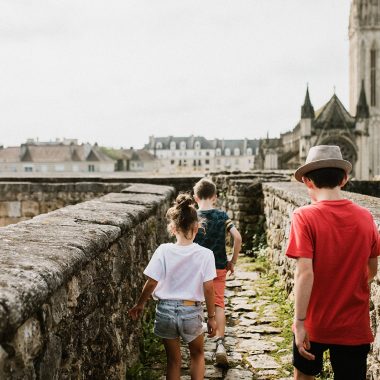
Just minutes from the sea and not far from the D-Day Landing Beaches, Caen is a great place to live – and the surveys say so! Whether you’re into history, culture or gastronomy, you’ll love William the Conqueror‘s favourite city. In fact, he had a castle and two abbeys built here. Not far from the castle is the historic district of Vaugueux, with its cobbled streets and fine restaurants. The Pays d’Auge, famous for its delicious local produce, is only a few kilometres away.

Identity card
- Département: Calvados
- Distinctive sign: Situated in the heart of Normandy, yet close to the coast
- Number of inhabitants within the city (source 2022 INSEE): 108,398
- Locals known as: Caennais / Caennaises
- Number of inhabitants in the urban area (source 2021 INSEE): 274,630 inhabitants
- Distance Caen <> Paris (by motorway): 246 km
- One of many typical expressions you might hear in Caen is ‘on se retrouve à la carre des rues,’ which means ‘let’s meet up at the crossroads’
Caen is an open and welcoming city, just 20 minutes from the beaches, where it’s great to study and there’s always something to do.
Rouen (Seine-Maritime)
Capital of the Duchy since Rollo in 911, Rouen is steeped in medieval history. Over 200 beautiful half-timbered houses are clustered around the cathedral. Rouen is also closely associated with Joan of Arc. Tried for heresy, she was burnt at the stake. On a happier note, the Impressionist painters had a close relationship with the Norman city through which the River Seine flows, and which became a source of inspiration. Today, the River Seine is still a real economic engine. Port activities and river cruises are well developed. Finally, Rouen is a major student city.
Identity card
- Département : Seine-Maritime
- Distinctive sign: Its strong medieval heritage and its geographical position on the Seine
- Number of inhabitants within the city (source 2022 INSEE): 116,331
- Locals known as : Rouennais / Rouennaises
- Number of inhabitants in the urban area (source 2020 INSEE): 496,629 inhabitants
- Distance Rouen <> Paris (by motorway): 136 km
- A word commonly banded about in Rouen is ‘TEOR’. Even if your French is good, you might be forgiven for not knowing it – it’s the local public transport network!
A cultural, lively and gourmet city, just an hour from Paris and the sea.

Le Havre (Seine-Maritime)
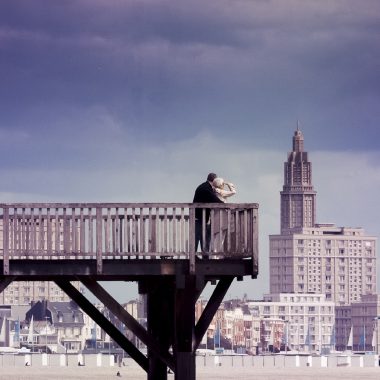
Situated at the mouth of the River Seine, this unique city was founded by Francis I in 1517 with the aim of making the Normandy port a major commercial crossroads. At the end of the 19th century, Le Havre became the French gateway to America. Today it is one of the largest ports in Europe. In recent years, Le Havre has become a popular destination for cruise ship passengers. Le Havre, whose city centre was rebuilt after the Second World War and is now a UNESCO World Heritage Site, has become a trendy city in just a few years. Its avant-garde architecture is atypical. Just 500 metres from the city centre, the 2km beachfront is a real asset.

Identity card
- Département: Seine-Maritime
- Distinctive sign: Its beach just 500 metres from the city centre, and its unusual architecture
- Number of inhabitants within the city (source 2022 INSEE): 166,462
- Locals know as: Havrais / Havraises
- Number of inhabitants in the urban area (source 2016 INSEE): 289,134 inhabitants
- Distance Le Havre <> Paris (by motorway): 197 km
- You might pick up a typical expression where you might hear a local say ‘c’est rien beau, dé!’ which means it’s REALLY nice. ‘Dé!’ is the wow factor!
A city on a human scale, with 2km of beachfront and a UNESCO-listed town centre.
A weekend in Normandy’s major cities
Our train trip ideas
Explore Normandy at your own pace and enjoy a more responsible holiday. You’ll also find some of our best addresses: hotels, restaurants and places to visit, all accessible without a car.