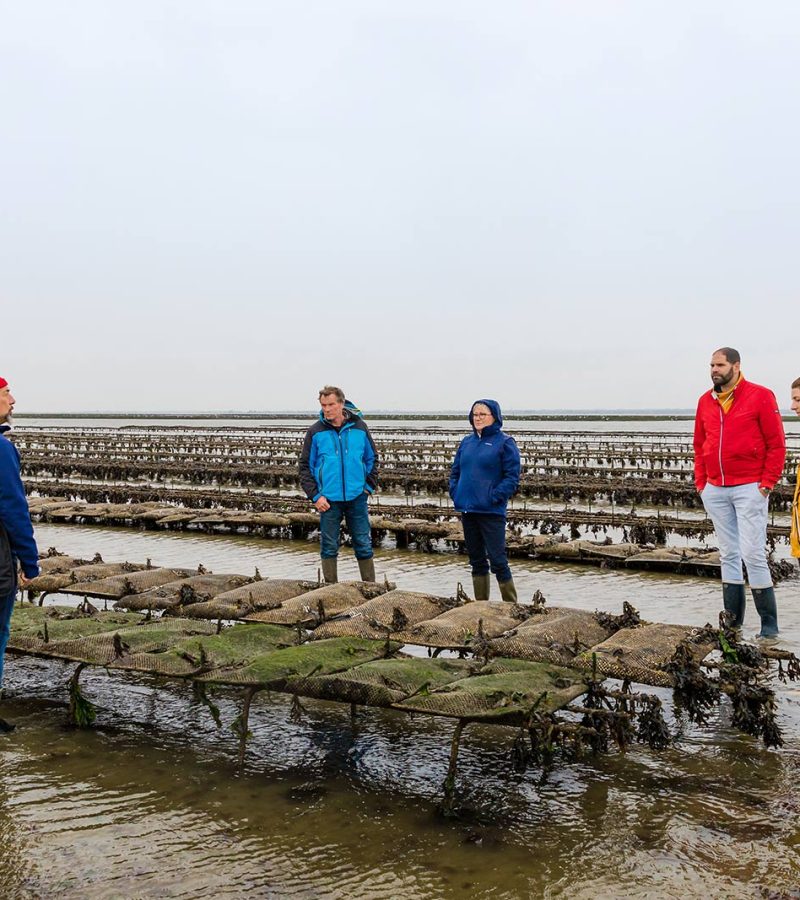


There has never been a better time to indulge your love of oysters. Along the windswept coast of Normandy, the Baie des Veys reveals a fascinating world where the art of oyster farming has been perfected over generations. This unspoiled bay, nestled between lush landscapes and shimmering tides, invites curious travelers to discover its treasures. When the opportunity arose to explore this hidden gem, my friends and I leapt at the chance. With perfect weather, freshly harvested oysters, and the warmest of welcomes, our visit turned out to be an unforgettable dive into one of Normandy’s most delicious traditions.
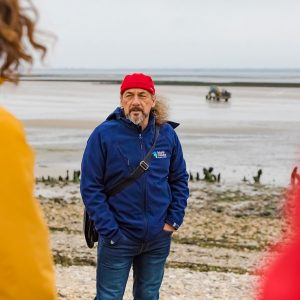
Eric ROTROU, professional Tour Guide
As a tour guide and outdoors enthusiast, Eric is in charge of hiking and sports department at the Isigny-Omaha tourist office. He has initiated a great partnership with oyster farmers of the area to showcase their activity and familiarise visitors with oyster farming. He enjoys sharing his extensive knowledge of the oyster aquaculture combined with his passion for the environment.
Activity Overview
Our group of friends share their story
A rendez-vous with an oyster farmer
Dressed in our trusty wellies and raincoats, we are warmly welcomed by Eric Rotrou, a knowledgeable and friendly guide from the Isigny-Omaha Tourist Office. Our adventure begins with an eye-opening introduction to the impressive scale of shellfish farming in the Grandcamp-Maisy area. We’re amazed by the sheer number of facilities and businesses dedicated to the thriving oyster aquaculture industry. Intrigued, we dive deeper into the story behind these treasures of the Baie des Veys. Starting at the oyster beds—ingeniously attached to man-made seaside structures—we witness the meticulous care that goes into their cultivation. Finally, our tour concludes at the Perron seafood company, where we get an insider’s look at the sorting and packing facilities that prepare these culinary gems for tables far and wide.
The immense Baie des Veys

Our visit takes place on foot, leading us to the oyster beds while we enjoy sweeping panoramic views of the Baie des Veys. This natural treasure, home to seabirds and harbor seals, stretches between the coasts of Bessin and Cotentin.
In the 11th century, this bay played a significant role in Normandy’s history. To avoid Isigny, controlled by the Norman baron Grimoult, William the Conqueror crossed the Baie des Veys to return to Falaise. Risking his life, he navigated one of the bay’s three fords, the Grand Vey, an 8-kilometer-long crossing. Upon his victory, William imprisoned Grimoult and seized his lands, granting Isigny as a lordship to his loyal companion, Hugues Suhart.
After sharing this important chapter of history, Eric shifts our focus to the astounding number of oyster farming tables spread between the two shores, a staggering area equivalent to 340 football fields. Here, Eric explains the remarkable patience and effort behind each oyster’s journey. From the time they are tiny larvae, it takes three years for them to reach maturity. Throughout this period, each oyster will be carefully turned and moved at least thirteen times by the farmer to ensure optimal growth and quality. It’s a humbling reminder of the craftsmanship and dedication that transforms these small shellfish into culinary treasures.
A thriving ecosystem
This vibrant estuarine ecosystem teems with life, from the tiniest microorganisms to larger creatures, all thriving in harmony. The lifeblood of this ecosystem is the rhythmic flow of water driven by the tides. It is during specific tidal stages that oysters feed, filtering water over their gills to extract vital nutrients. Eric points out that four rivers and streams converge in this estuary, enriching the waters with a bounty of nutrients that the oysters transform into their signature flavor. Over the growing season, the oysters are carefully sorted by size and moved to different trestles, ensuring optimal conditions for growth.
The work doesn’t stop there, each bag of oysters must be turned and shaken by hand, a meticulous process to prevent the shells from fusing together. With tens of thousands of bags requiring attention, this becomes a full-time endeavor for the oyster farmers, continuing throughout the year. It’s a testament to their dedication and the intricate balance between nature and human care that defines oyster farming in the Baie des Veys.
The Sorting Process: Grading and Sizing Oysters


Sorting oysters by shape and size is a crucial step in preparing them for market. The process, which is done manually, involves weighing and selecting oysters based on their size. Depending on their grade, oysters are either placed in basins or sent for further sorting. At this stage, oysters are separated and repackaged in larger bags to continue their growth. Oyster sizes are graded from 1 to 5, with the higher numbers indicating smaller oysters. William Perron, the oyster farmer, is constantly analyzing market trends and forecasting demand to ensure there is always enough supply, especially during high-demand periods like Christmas and New Year’s celebrations. This meticulous planning ensures a steady supply of oysters, ready to meet the market’s needs.
Savouring Freshly Harvested Oysters

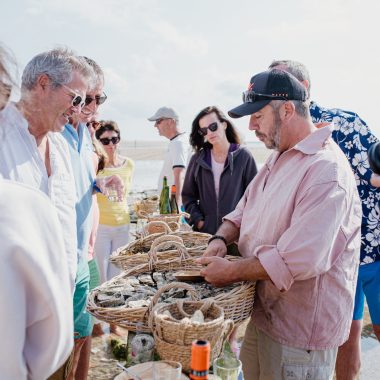
The visit concludes with a tasting of the freshest oysters, just lifted from the beds. Eric explains that to ensure the quality of the oyster, it’s essential to discard the first water and wait for the second to form. If this happens, it’s time to savor the plump, tender flesh of the Isigny oyster—a delightful treat that awakens our taste buds with its intense briny flavor. Our guide also shows us how to tap the shell, explaining that the distinct sound it makes can tell you if the oyster is ready to eat. We are keenly aware that we’re far from experts, but we’re eager to learn. As for opening the oyster with the famous knife… it’s a risky business! First, you need to locate the oyster’s vital point, the muscle that connects the two shells. Then, carefully insert the knife at the right spot, ensuring your thumb is just 3 millimeters from the blade’s tip. A couple of quick twists, and the shell opens. No doubt about it, the Normandy oyster is a true prize.

Useful Information
A unique place
The Baie des Veys
The Baie des Veys is an estuary where four of the main rivers of the Parc converge: the Aure, the Vire, the Taute, and the Douve. A prime oyster farming area for both Isigny and Utah Beach, this vast, protected natural space is shaped by the rhythm of the tides. With its rich ecosystem, the bay produces up to 10,000 tons of oysters each year, making it a true sanctuary for shellfish cultivation.

Base conchylicole 14450 GRANDCAMP-MAISY
Your itinerary
Dates and Rates
Visit on foot of the oyster beds in the Baie des Veys, on the shellfish farming area of Grandcamp-Maisy
Organised by Isigny-Omaha Tourist Office
16 rue Emile Demagny
14230 Isigny-sur-Mer
+33 (0)7 56 41 87 44
[email protected]
[email protected]
www.isigny-omaha-tourisme.fr
Possible tours on a horse-drawn carriage.
Visits take place with the following oyster producers: André Gilles Taillepied, Alain Pourtier, and EURL Perron.
Dates 2025
Tours are organised during school holidays.
Groups Tours are available all year round on request.
More Information at the Isigny-Omaha Tourist Office.
Walks on the Intertidal Zone (by foot):
- Monday 7 April – 13h30
- Monday 7 July – 14h to 16h
- Monday 21 July – 14h to 16h
- Monday 28 July – 18h30 to 20h30
- Monday 4 August -11h30 to 13h30
- Monday 11 August – 18h30 to 20h30
- Monday 19 August – 11h30 to 13h30
- Monday 25 August – 18h to 20h
- Thursday 30 October – 09h30 to 11h30
Horse-drawn Carriage Rides:
- Tuesday 8 April – 14h to 16h
- Tuesday 8 July – 15h to 17h
- Tuesday 15 July – 18h30 to 20h30
- Tuesday 22 July – 14h30 to 16h30
- Tuesday 29 July – 18h30 to 20h30
- Tuesday 5 August – 13h30 to 15h30
- Tuesday 12 August – 18h30 to 20h30
- Tuesday 19 August – 13h to 15h
- Tuesday 26 August – 18h to 20h
Rates 2025
- Adult (Full Price): €6 for the walking tour, €25 for the horse-drawn carriage tour.
- Child (4 to 12 years old): €3 for the walking tour, €15 for the horse-drawn carriage tour.
- Family Package (2 adults, 2 children): €70 for the horse-drawn carriage tour.
- Free for children under 4 years old.
Good to know!
What to Bring:
Please wear a windbreaker and waterproof shoes.
Accessibility:
This activity can be adapted for individuals with visual impairments upon prior request.
Would you like to live the same experience?
Join a guided tour of the oyster beds in the Baie des Veys, where you’ll discover the meticulous work of artisanal oyster farmers and the rich, nutrient-filled waters that sustain this traditional practice.
Grandcamp-Maisy
6€ per person (adults)
April, July, August, October
What Made It Special
Diving into the fascinating world of oysters and discovering the artisanal oyster farms of the Baie des Veys.
A Tasty Journey around Oysters and Mussels in Agon-Coutainville
Agon-Coutainville

Cheese and Cider Tasting in Normandy
Pont L'Évêque
