In 911, a Viking chieftain was granted a territory by the King of West Francia for himself and his men, the Men of the North, also known as the Normans. And so Normandy was born. But who were the first Normans?
Who Were the Vikings?
Whether they are called Vikings or Norsemen, these Scandinavian explorers were, above all, exceptional seafarers. They came from present-day Sweden, Norway and Denmark. Between the 8th and 11th centuries, they crossed the seas aboard remarkable ships that were both reliable and highly manoeuvrable. The prow of their vessels was often decorated with a carved animal, most commonly a dragon. This is why they are now widely referred to as drakkars, a name derived from the Swedish word for “dragon”. The Vikings first took to the seas as traders. Pottery, furs, slaves… their trade networks thrived. Their expeditions also took them far beyond their homelands. They sailed as far as the Mediterranean and Russia, and even reached Greenland and North America. But trade was not their only means of acquiring wealth. In 793, a first major raid took place in northern England, when the monastery of Lindisfarne was attacked and plundered.
Year 841, the Normans sail up the River Seine
At the beginning of the 9th century, raids by the Norsemen became increasingly frequent in West Francia. The kingdom was poorly defended, lacked a naval fleet, and was home to numerous monasteries. Filled with valuable treasures and without military protection, these religious establishments were ideal targets. The attacks were swift and unexpected. Their aim was to seize as much wealth as possible and leave before armed forces could arrive. These raids helped forge the enduring myth of the unstoppable Viking warrior. As the years went by, the Norsemen grew bolder, venturing ever deeper into the kingdom by sailing up its rivers.
Year 911, a territory for the Men of the North
By the end of the 9th century, the Men of the North had begun establishing long-term settlements in certain parts of the region. Around 876, a Viking leader named Rollo settled near Rouen. From there, he used the area as a base for raids across the region: Saint-Lô, Bayeux, Paris… no town seemed beyond reach.
In 911, King Charles III, known as Charles the Simple, took advantage of Rollo’s defeat at Chartres to force him into negotiations. Under the agreement, the king would officially grant the Viking leader the territory around Rouen, provided that he agreed to defend the Seine against other Viking groups, convert to Christianity, and marry the king’s daughter, Gisla. This agreement became known as the Treaty of Saint-Clair-sur-Epte. Rollo accepted its terms, paving the way for the birth of the land of the Normans: Normandy!

Places to Discover Viking Heritage in Normandy
Must-See Sites
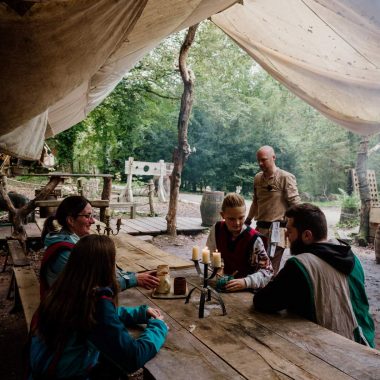
- Ornavik Historical Park, near Caen (Calvados): Through guided tours or immersive experiences, delve into the history of Normandy at this experimental archaeology site. The park offers a fascinating insight into the Viking world, with faithful reconstructions of 10th- and 11th-century buildings and craft techniques. From 2027, Ornavik will also feature a dedicated Viking interpretation centre.
- The Viking Immersive City (Cité Immersive Viking), Rouen (Seine-Maritime): Through a wide range of interactive displays and a visitor trail spread across five themed rooms, explore Scandinavian culture, its craftsmanship, mythology, history and lasting legacy in the modern world.
Other Sites Worth Visiting
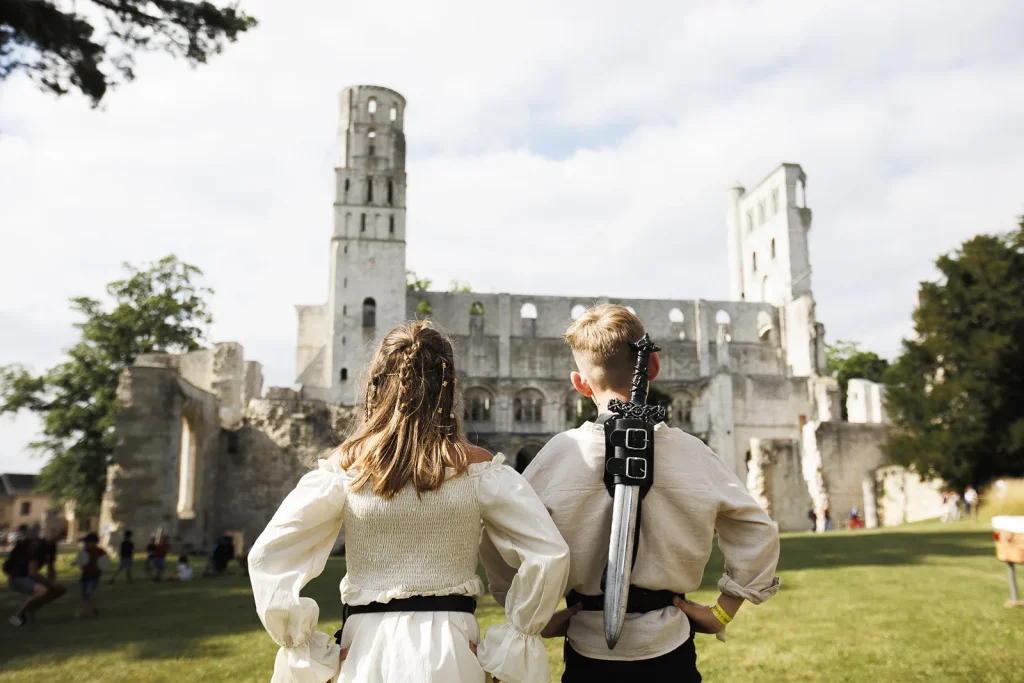
- Jumièges Abbey (Seine-Maritime), which was plundered during the Viking raids and today preserves some of the most impressive monastic ruins in France.
- Rouen Cathedral (Seine-Maritime), home to the tomb effigy of the Viking leader Rollo.
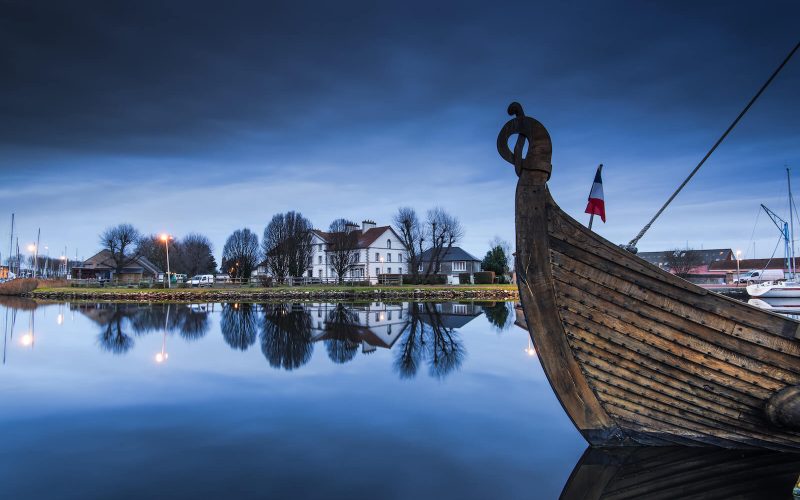
- The Dreknor, a faithful replica of a Viking ship, moored in the harbour of Carentan-les-Marais (Manche).
FAQ
What country did the Vikings come from?
The Vikings originated from Scandinavia, a region of Northern Europe that today includes Norway, Sweden and Denmark.
Between the 8th and 11th centuries, these Nordic peoples, also known as the Norsemen (“men from the North”), left their homelands to explore, trade and conquer new territories across Europe.
Highly skilled sailors and shipbuilders, the Vikings travelled extensively across the North Sea, the English Channel and the Atlantic Ocean, and navigated major European rivers such as the Seine, enabling them to venture deep inland.
Who defeated the Vikings?
The end of the great Viking invasions of England is traditionally associated with the year 1066.
That year, the Norwegian king Harald III of Norway, often referred to as “the Last Viking,” attempted to invade England. He was defeated by the Anglo-Saxon king Harold Godwinson at the Battle of Stamford Bridge.
Just a few weeks later, England was conquered by William the Conqueror, a descendant of the Vikings who had settled in Normandy. This event is widely regarded as marking the symbolic end of the great age of Viking expeditions.
Who are the Vikings today?
The Vikings as a distinct people no longer exist today. However, their descendants mainly live in the Scandinavian countries of Norway, Sweden and Denmark.
The Viking legacy can also be found in Iceland, Greenland, Scotland and Ireland, regions that were once explored or settled by these Nordic seafarers.
Today, Viking influence lives on through the culture, language, maritime traditions and heritage of these regions.
Which Viking became Duke of Normandy?
The Viking most closely associated with the history of France is Rollo.
In 911, King Charles the Simple granted him a territory along the Seine under the Treaty of Saint-Clair-sur-Epte.
Rollo thus became the first ruler of what would later become the Duchy of Normandy. His descendants, known as the Normans, went on to play a major role in medieval European history.
A different way to discover the Middle Ages
Our selection of Normandy Experiences
Normandy Experiences are local gems that add meaning to your trip. You’ll meet Normandy people who are truly passionate about what they do.
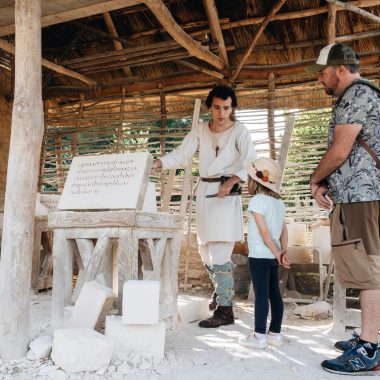
Viking adventures at Parc Ornavik
Hérouville-Saint-Clair