
Since ancient times, linen (or flax) has found in Normandy the clay soil and climate it needs to thrive. With 80,000 hectares spread over Eure, Seine-Maritime and part of Calvados, Normandy produces almost 50% of the world’s flax!
Centuries-old expertise
Sown in March and April at a rate of 1,800 to 2,000 seeds per square metre, flax grows at a rate of 1cm per day. The fields are soon covered with a beautiful soft green carpet which, for a week or two in late May or June, is transformed into a sea of blue flowers rippling in the sun. After 100 days, the flax is ready. The stalks, which are between 90 cm and 1 m high, are too hard to cut. So the flax is pulled up with special farm machinery and spread out on the ground in small sheaves called windrows. During the summer, the windrows wither. Under the influence of the rain and the sun, a fungus develops on the stalks and breaks down the gangue that encloses the textile fibres: this is the process of retting, which takes place naturally thanks to the Normandy climate.

Nothing is lost in linen
Early September, the swaths are collected and transported to the combing units known as teillages. Once the seeds have been collected, they are separated by the drums of the scutching machines:
- The long fibres are used to make 100% linen sliver, which is mainly exported to Asian spinning mills.
- Short fibres, known as tow. These are blended with other fibres, such as cotton, to make linen-look fabrics or technical non-wovens.
- The hard parts are used to make chipboard.
- Mixed straws are used to improve horse bedding.
- The final waste products are used to make a variety of gardening products.
- As for linseed oil, in addition to its traditional uses, it is used in the composition of new plastics used in the automotive and aerospace industries.
Things to see and do
- L’Écomusée – Maison du Lin in Routot (Eure): exhibitions, demonstrations, on-site shop, organisation of the Linen Festival in June.
- The Terre de Lin spinning mill at Saint-Pierre-le-Viger (Seine-Maritime)
- The Linen Eco-Museum (Ferme Au Fil des Saisons) in Amfreville-Les-Champs (Seine-Maritime)
- La Semaine du Lin (Linen week), in June in Doudeville (Seine-Maritime)
- The Flax Festival, in July/August in Le Bourg-Dun, near Dieppe (Seine-Maritime)
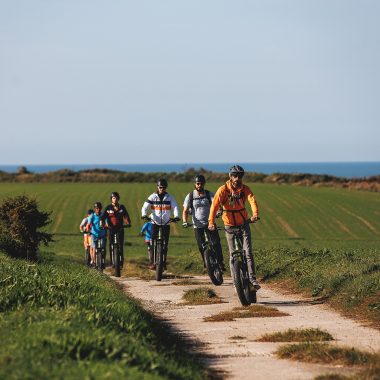
- Cycling on the Véloroute du Lin (Flax Route), an 80 km green route linking Pourville-sur-Mer, outside Dieppe, to Fécamp in the Pays de Caux. In June, you’ll be pedalling between the little blue flowers.
A different way to discover Normandy
Our selection of Normandy Experiences
Normandy Experiences are local gems that add meaning to your trip. You’ll meet Normandy people who are truly passionate about what they do.


Thematics