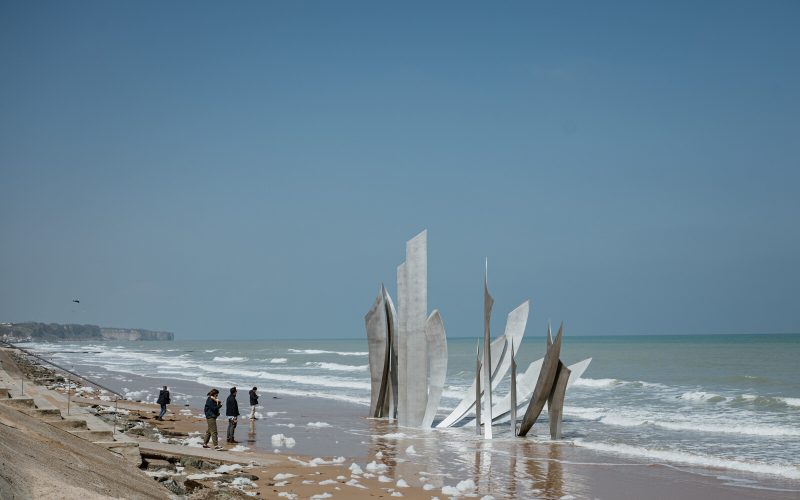
July 2026: the World Heritage Committee has delivered its decision. The D-Day Landing Beaches, Normandy, 1944 are now inscribed on the UNESCO World Heritage List. Eighty-two years after Operation Overlord was launched by the Allied forces to liberate Europe, this recognition further anchors these sites in history and in the collective memory.
The D-Day Landings: a Turning Point in History
This inscription is first and foremost an act of remembrance. It recalls the story of the soldiers who reached the Normandy coast by sea and by air in the early hours of 6 June 1944. Thousands of men, Americans, British, Canadians and French, alongside Belgians, Dutch, Norwegians and Poles, who, at the cost of immense sacrifice, helped set in motion one of the decisive turning points of the Second World War.
A Living Legacy Recognised Around the World
These beaches tell far more than the story of a military operation. Over the decades, and through successive commemorations, they have become places of remembrance, gathering and transmission. Each year, millions of visitors from around the world explore the beaches, military cemeteries, museums and memorial sites to gain a deeper understanding of the D-Day Landings and to pay tribute to the men and women who fought for freedom.

In 2025, Normandy’s memorial sites and places of remembrance recorded more than 5.9 million visits. This exceptional level of attendance, which reaches its peak during major D-Day anniversaries, bears witness to the international appeal of these sites and the enduring strength of their legacy.
It is this Outstanding Universal Value, conveying a message of peace, freedom and reconciliation, that UNESCO has now recognised, following a nomination process spanning several years and led through a collective endeavour involving the Normandy Region, the French State and stakeholders across the territory.
A Legacy to Preserve
The inscription of the D-Day Landing Beaches on the UNESCO World Heritage List represents international recognition of this historical and cultural heritage. Significant traces of the events can still be found along the coastline, including the remains of the Mulberry B artificial harbour off Arromanches. With UNESCO World Heritage status comes a responsibility to preserve the site for future generations. A dedicated management plan will address environmental challenges, particularly the impact of climate change on the coastline, while involving local communities in the governance of the property.

Passing on This Heritage to Future Generations
Joining the World Heritage List is also a commitment to the future. At a time when fewer and fewer direct witnesses remain, passing on this legacy to younger generations becomes an increasingly important challenge. The responsibility now lies with the memorial sites themselves and with those who bring their stories to life. This collective ambition is more relevant than ever: ensuring that future generations continue to engage with the history of D-Day and the universal message of peace it conveys, for the world of today and tomorrow.
